
It’s normal for us to expect that storytelling goes upward, especially when it comes to character development. Progress is measured by characters breaking out of their insecurities, facing their flaws, and gaining experience of the wider world.
We find this evolution satisfying. But is the opposite true as well? Can the deterioration of a character to their previous state (or even further) be just as cathartic to the audience?
Negative Character Development
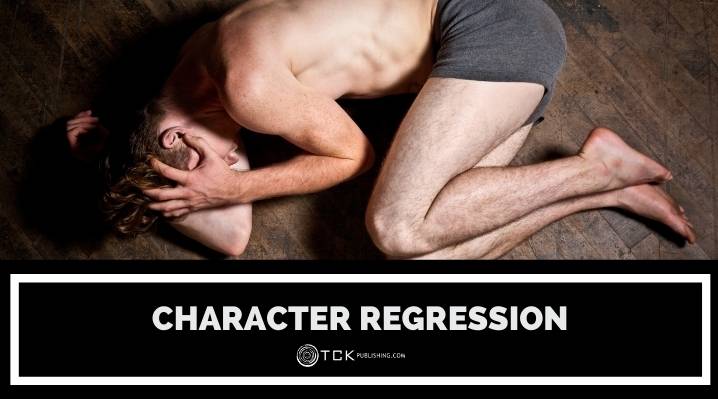
A character’s development doesn’t necessarily mean changing for the better. They can devolve, getting worse or weaker over time. It’s a rare route to take, as the audience would likely prefer an upward development.
Think of a hero journeying to defeat evil, only to become evil themselves. An optimistic character ends up embittered from the cruelties of the world; or, someone succumbs to temptation, falling further into their vices.
Regression serves to create conflict, whether it’s a big part of a character’s development or a temporary problem.
When a character regresses, it presents a new challenge that needs to be conquered. It also increases tension, as having a character fail from time to time leaves the audience unsure of their victory.
It’s not as simple as saying goodbye to a good character and turning them entirely evil; it’s about showing their darker sides and that they’re imperfect. The possibilities that come from these imperfections are what writers can explore.
How To Write Character Regression
No one likes failure and hardship. As such, there’s always a gamble when you decide to have a character regress. Here are a few tips on how you can use character regression without hurting your story.
Let characters learn from experience.
Mary Sues and Gary Stus are terrible characters because they can do everything perfectly. Their experiences in the story don’t matter, as they don’t need to gain anything from them. No amount of failure or success changes their perfection. Don’t fall into the trap of writing these characters.
Instead, build your character up to a point where they feel ready to take on the challenge. Suddenly, they realize that they’re nowhere near prepared enough, or a series of setbacks, temptations, and betrayals leave them defeated. Things are looking bad and they lose confidence in themselves.
But what do they learn from this? The right lessons prevent them from failing again (at least, in the same way). The wrong lessons leave them thinking darker thoughts and committing darker actions. Of course, what is right or wrong will depend entirely on you.
That moment of introspection decides what they learn and which path they will take. Anticipating their decisions will provide tension to the story.
Villains are often made this way. They experience hardship that affects their perspective negatively, which leads them to believe that they’re better off being bad.
Add consequences.
Failure will always have consequences. The lack of consequences diminishes the impact of the failure. Someone has to die, something needs to be lost or destroyed, or a character needs to come out damaged in some way.
Have your character fall back on bad habits, lose confidence or be overconfident, compromise their ideals, and in any other way you can get them to regress. When the consequences come, that’s the time they shine. Their actions, decisions, and general attitude in the face of the aftermath will show what kind of people they are.
In many cases, these regressions become the driving force of the plot. A moment of weakness in your character can lead to catastrophic consequences, which they must correct.
Make them earn the regression.
Regression needs to be justified. Any abrupt change has no substance and will likely turn the audience against you.
Your character must earn this change. It is acceptable for a person with a history of alcoholism to suddenly succumb to the vice again. But someone who isn’t a drinker becoming an alcoholic overnight? That is too farfetched.
This is why backstory is so important. You need to tell the audience how and why characters reached a certain point in their development. It’s the same concept of not having your villain be evil for the sake of being evil.
The cause doesn’t need to be linear or overtly expressed; you can introduce it through flashbacks, narrative suggestions, and other tidbits of information scattered throughout the plot. The point is to give the regression a basis so it doesn’t upend your characterization.
Examples of Character Regression
Used well, character regression leaves a lasting impression on your audience. Here are a few famous examples that have stuck with fans for years.
1. Anakin Skywalker from Star Wars
Believed to be the Chosen One, many thought Anakin Skywalker would bring balance to the Force. As a Jedi, he led many victories to the Order, becoming known as the “Hero with No Fear.”
But grief over his wife’s coming death, resentment against the Order’s dogmatism, and the persistent corruption from someone close by finally push him to the brink. He joins the dark side, becoming the feared Darth Vader.
2. Macbeth from Macbeth
Macbeth is a Scottish general and thane of Glamis. After winning a war against traitors to the Crown, he encounters a trio of witches who prophesy his rise to kingship.
Macbeth claims the throne through reluctant murder. Soon after, it becomes easier for him to kill in order to solidify his reign. Violence becomes his answer to every problem, no matter how shaken he is by his atrocities.
3. Saruman from Lord of the Rings
As one of the Istari, Saruman is sent to Middle-Earth to help guard it. He was the greatest of his Order, meant to lead and represent the other wizards in the fight against Sauron.
Unfortunately, he thought Sauron’s victory was inevitable. Wanting power rather than failure, he switches sides and causes a lot of trouble in the land. He breeds orcs, destroys Fangorn forest, meddles with Rohan, and schemes against the Fellowship.
4. Benjamin Button from The Curious Case of Benjamin Button
Benjamin’s regression is both physical and mental. He is born with a rare condition that makes him age backward. He is delivered into the world looking old and exhibiting the physical ailments of an old person.
His maladies disappear as his body gets younger and stronger. His mind goes from an elderly man to a child. In the end, he can no longer take care of himself and dies in infancy.
5. Benjamin Barker from Sweeney Todd: The Demon Barber of Fleet Street
Benjamin Barker is an excellent barber and family man living in Victorian London. His perfect life is ruined when a corrupt judge lusts after his wife. He is exiled and returns 15 years later, finding his wife dead and their daughter in the judge’s care.
He slowly falls insane with revenge. He goes on a killing spree, entering a deal to provide the corpses of his victims as meat supplies to the pie shop below his own store.
6. Bucky Barnes from Captain America: The Winter Soldier
Bucky Barnes is best friends with Steve Rogers and served alongside him during World War II. He is part of the Howling Commandos, an elite unit specifically made to counter Hydra and the Nazis. During one mission, he falls off a train to his apparent death.
However, he actually survived and was tortured and brainwashed by Hydra. As the Winter Soldier, he is responsible for many assassinations and terrorist acts all over the world.
7. Ozymandias from Watchmen
Adrian Veidt is the world’s smartest man who also happens to be the former superhero, Ozymandias. After realizing that no amount of crimefighting can save the world, he hatches a plan to fake an alien invasion and unite the world against a common enemy.
He bioengineers the alien, exposes people to radiation, and kills friends and foes alike to keep his plan secret. It succeeds, causing the deaths of three million people and uniting the world. His former colleagues are forced to keep up the lie to prevent further chaos.
Character Derailment
Character derailment is when a character has a drastic change that isn’t supported by their characterization. There is no organic growth; it often happens because an author stretches the character to fit a certain idea.
It’s different from regression, as the latter has a backstory. Derailment just happens out of nowhere and without justification. People suddenly exhibit traits or behavior that are out of character, which surprises and confuses readers.
Let’s take Hannibal as an example. The titular killer tries to brainwash Clarice Stirling into becoming a stand-in for his long-dead sister. He fails, but Clarice joins him and becomes his lover anyway. It’s not really clear why, and it has become a controversial part of the series.
Character derailment doesn’t mean permanent damage, though. Sometimes the issue is fixed and the character is re-railed onto the right track. Deadpool does this twice. It changed the movie versions of the Juggernaut (X-men: The Last Stand) and Deadpool (X-Men Origins: Wolverine) into more comic-accurate and less laughable portrayals of themselves.
Progress by Stepping Back
To be clear, regression isn’t about resetting a character. It’s about having them fail, and then exploring the circumstances and consequences that come from these failures.
This matters because it’s human. Progress is rarely a continuous upward trend; setbacks, mistakes, and half-victories are a natural part of character development.
Progress that is too perfect is seen as artificial—as if the writer (who is technically a story’s god) is directly meddling with the journey to make it a success. Anything that feels forced or unnatural hurts the audience’s immersion in the story.
Did you find this post useful? Share your thoughts in the comments below!
If you enjoyed this post, then you might also like:
- 60 Questions to Ask Your Characters
- 5 Tips for Writing Your Setting as a Character
- How to Introduce a Character Your Readers Won’t Forget
- 45 Types of Stock Characters to Help Build Your Story

Cole is a blog writer and aspiring novelist. He has a degree in Communications and is an advocate of media and information literacy and responsible media practices. Aside from his interest in technology, crafts, and food, he’s also your typical science fiction and fantasy junkie, spending most of his free time reading through an ever-growing to-be-read list. It’s either that or procrastinating over actually writing his book. Wish him luck!
