

If you find yourself staring at a blank page not knowing what to write, you know exactly how many students feel when asked to work on a writing assignment! The good news is that giving students or kids a picture to start with can be a great launching pad. This is why picture writing prompts can be very powerful.
What are visual writing prompts?
Picture writing prompts refer to a picture that you use as a starting point for writing. It can be a fantastical scene, or even an everyday object, that sparks a child’s imagination and gets him or her to start writing. The output can be a work of fiction, or it may be a descriptive essay. The point is that it helps them get over writer’s block by giving them something concrete to start with.
Here are some of the advantages of using picture writing prompts:
You give your students specific things to write about.
One of the biggest hurdles to writing is the first sentence. Having something to start on means half the battle is over! This is especially helpful for students who have trouble starting on any writing project, but can soar on their own once they get started.
The scene in the picture sets automatic boundaries
Sometimes, struggling writers have trouble because they have too many ideas flying around in their minds that they don’t know which one to pick. Having the picture set the boundaries, ironically, helps promote creativity rather than stifle it. It tells the child what he or she can write about, and also possibly what NOT to write about.
It helps children practice descriptive writing
Do you know that children actually have the natural skill of describing things? You can see this happen, for example, when a child goes somewhere and comes back describing everything that happened. The problem is that when it comes to writing, they may get stuck because they’re not sure what to describe.
Giving them a picture to describe helps them put down in words that they actually already do verbally: by actually describing something that they see.
The picture helps the child think up more adjectives than they normally would.
Instead of the perpetual battle of asking a child, “What next?” or “Come on, you can describe things more than that,” the picture itself serves as the trigger for adding more adjectives.
Picture prompts give them enough information to start while still letting them soar.
Yes, the picture prompt can trigger a story, but it still lets students have free rein of where they want to go. For example, the picture might portray a mountain, and the child might write about a hero that journeys from a mountain home all the way to an ocean adventure!
How to Use Picture Writing Prompts
If you want to use picture writing prompts for your budding writers, here are some tips to get you started.
1. Pick pictures that your writers can relate to.
One of the most important advice to writers is: “Write what you know.” Bear this in mind when picking picture writing prompts, particularly for younger writers.
Of course, this doesn’t mean that you pick pictures that are very self-explanatory. On the contrary, consider using images that have a bit of ambiguity. This can give your students greater chance to brainstorm and give their own interpretation.
2. Find interesting or thought-provoking pictures.
Every story needs some kind of conflict to get it going. This is why the pictures you pick shouldn’t always be idyllic. Consider also pictures that have contradictory elements. For example, if you want to show a picture of a happy family, perhaps having one of the children frowning off to the side can trigger a good story idea.
3. Consider using two separate prompts.
For older students, you might use two unrelated images and ask them to write a story that includes both elements. This adds to the challenge.
4. Train them in the basic elements of storytelling.
Sure, having pictures to start a story is a good launching pad. But if your students don’t know the basics of storywriting, you’ll probably get nothing better than a narrative that goes, “and then,” “and then,” “and then.”
Instead, show them how stories generally proceed on a “because of that” trajectory, where one thing causes another, and conflict escalates until it comes to a satisfying conclusion. This way, you’re training budding writers to be effective storytellers, not just descriptive writers.
5. Give them time to contemplate on the image.
The muse doesn’t always come exactly when summoned. Even though you’re using a picture writing prompt, it doesn’t mean that your students will automatically start writing! Be sure to give them enough time to obseve and study the picture.
6. It can be open-ended or guided.
Although you choose to prompt writing using a picture, remember that you still have the option of including a question or not. For example, you might bring your students’ focus to a certain aspect of an image. Or you might opt to stay absolutely silent and just let them go wild. It’s really all up to you!
7 Examples of Picture Writing Prompts
With that said, we hope the following picture writing prompts can result in amazing output from your students!
Picture Writing Prompt #1
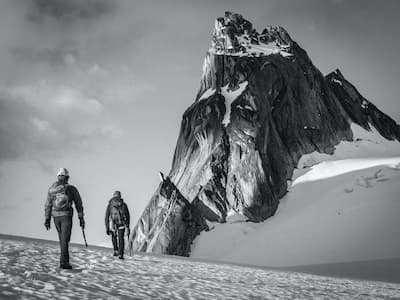
Possible guide questions:
- Where are these people going?
- What challenges do you think they will face?
- What do you think happens during this trip?
Picture Writing Prompt #2

Possible guide questions:
- What do you think is the castle in the distance?
- What kind of characters do you think are in this scene?
- What is the role of the row boat in the story?
Picture Writing Prompt #3

Possible guide questions:
- Who do you think are in the van?
- Where are these people going?
- What challenges do you think they will face?
- What do you think happens during this trip?
Picture Writing Prompt #4
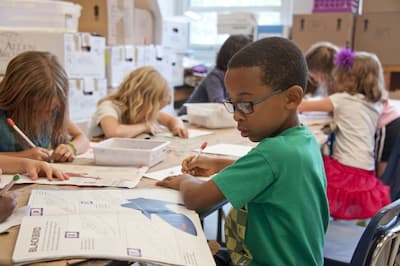
Possible guide questions:
- What do you think are these children doing?
- Who would you want to make the main character? What sets him or her apart from everyone else?
- What challenges do you think your main character will face?
Picture Writing Prompt #5
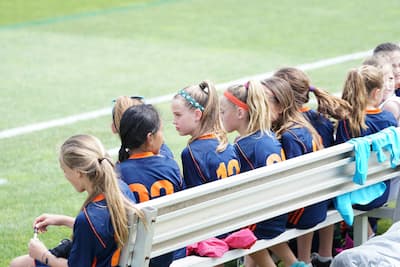
Possible guide questions:
- Who are the characters in this scene?
- What challenges do you think they will face?
- What do you think happens in the story?
Picture Writing Prompt #6
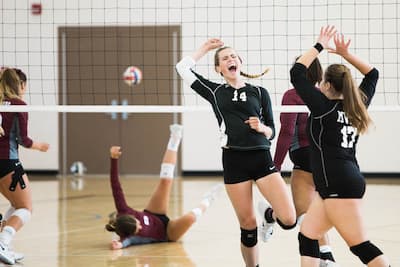
Possible guide questions:
- What do you think is happening in this scene?
- What challenges do you think they will face?
- What do you think happens next?
Picture Writing Prompt #7
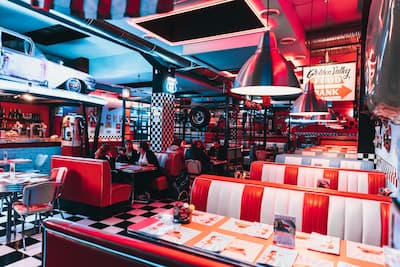
Possible guide questions:
- What is it like in this scene?
- What kind of persons are the characters in this scene?
- What challenges do you think they will face?
- What do you think is happening this particular day?
Using Picture Writing Prompts
Picture writing prompts are a great tool to get students, especially reluctant writers, to get the creative juice going.
But remember, it’s still just one of many tools in teaching them good writing. You will still need to go through the basics of storytelling, good grammar and word choice, and all the other fun elements of learning to write well.
Did you find this post helpful? Let us know in the comments below!
If you enjoyed this post, then you might also like:
- 35 Adventure Writing Prompts to Kickstart Your Story
- 35 Sci-Fi Writing Prompts to Inspire Your Next Epic Story
- 30 Thriller Writing Prompts To Get You Writing
- 32 Fantasy Writing Prompts To Help Relieve Your Writing Slump

Yen Cabag is the Blog Writer of TCK Publishing. She is also a homeschooling mom, family coach, and speaker for the Charlotte Mason method, an educational philosophy that places great emphasis on classic literature and the masterpieces in art and music. She has also written several books, both fiction and nonfiction. Her passion is to see the next generation of children become lovers of reading and learning in the midst of short attention spans.
