

Language—with all its oddities and variations—can often lead people down amusing paths. One such path is the crash blossom, a headline so confusing and weird that it will leave you scratching your head.
Crash Blossoms
Crash Blossoms gained its name when editor Mike O’Connell read an ambiguous headline—“Violinist Linked to JAL Crash Blossoms”—and wondered what the hell a crash blossom was.
The headline wasn’t talking about a violinist linked to the mysterious crash blossoms. It meant that a violinist linked to a crash is now blossoming in her career.
In this case, “blossom” is being used as a verb, but the nature of the headline makes it look like a noun. Unfortunately, the article is no longer available though some screenshots can be found.
The term was quickly adopted as the name of seemingly nonsensical headlines, becoming a popular subject in many language forums. The phenomenon itself isn’t new though, as it’s already a known characteristic of headlines.
Why does it happen?
Headlines are meant to convey a lot of meaning but are usually crammed into tight spaces. This meant that editors and writers would often compromise with their use of language.
A common compromise is omitting the copula, a word or phrase that links a subject to its complement such as is, are, to be, and was. Short words, omitting punctuation, wordplay, present-tense verbs, and noun stacking are also used to make headlines more compact. This style of writing is often called headlinese.
While it does save space, it also results in an ambiguity in syntax. Because the structure of a sentence isn’t immediately clear, you fail to grasp its correct meaning. You interpret it in different ways instead.
Even the most prestigious publications aren’t immune to this phenomenon. And while crash blossoms don’t always happen, they happen often—especially when words with multiple meanings and uses are involved.
Examples of Crash Blossoms
Here are a few entertaining examples of crash blossoms that have appeared in the media.
1. Scientists count whales from space

There are space whales? And why are scientists counting them?
Actual meaning: Scientists can now use satellite imagery to automatically detect and monitor whales at or near the surface of the ocean.
2. Shell found on beach

The least surprising things you’ll find on the beach are sand, crabs, and uhh…shells.
Actual meaning: A shell—a projectile used in heavy weaponry—was found on the beach and collected by the relevant authorities.
3. Dutch military plane carrying bodies from Malaysia Airlines Flight 17 crash lands in Eindhoven

It would be a double tragedy if the plane carrying the bodies of the victims of a plane crash also crashed.
Actual meaning: A Dutch military plane, carrying the bodies from the Malaysian Airlines Flight 17 crash, safely lands in Eindhoven, Netherlands.
4. McDonald’s fries the holy grail for potato farmers

If McDonald’s had gotten their hands on the holy grail, why are they frying it for potato farmers?
Actual meaning: Potato farmers are on the hunt for the perfect potato variety to be used in McDonald’s french fries.
5. Shark kills number 100 million annually, research says
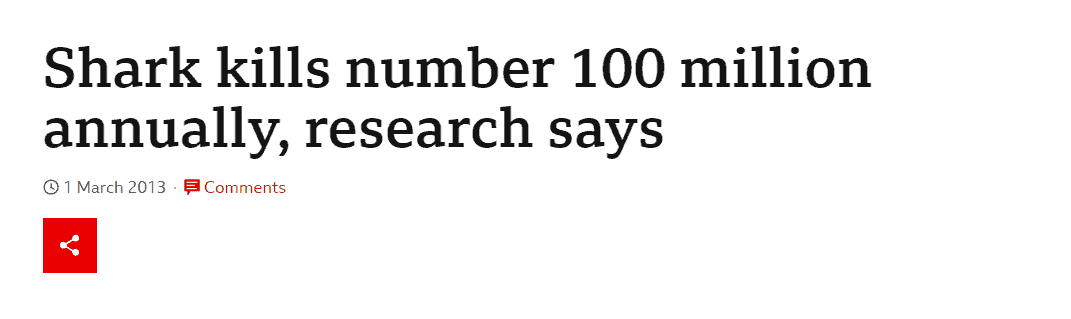
How did one shark kill that many people? Or you know, how did it kill the number 100 million?
Actual meaning: Commercial fishing sees a worrying rate of 100 million sharks being killed every year.
6. Sheep farmer injured after wolf attack in Wapse, ordered to be shot

It’s a very bad day for the sheep farmer to not only get attacked by a wolf but also get shot.
Actual meaning: A wolf, after attacking a sheep farmer, is later shot by the police.
7. Police officer jailed for attacking members of the public found dead

Why is a police officer assaulting dead people?
Actual meaning: A police officer, who is guilty of assaulting members of the public, is found dead just after being released from prison.
8. Knife crime: St John Ambulance to teach teens to help stab victims
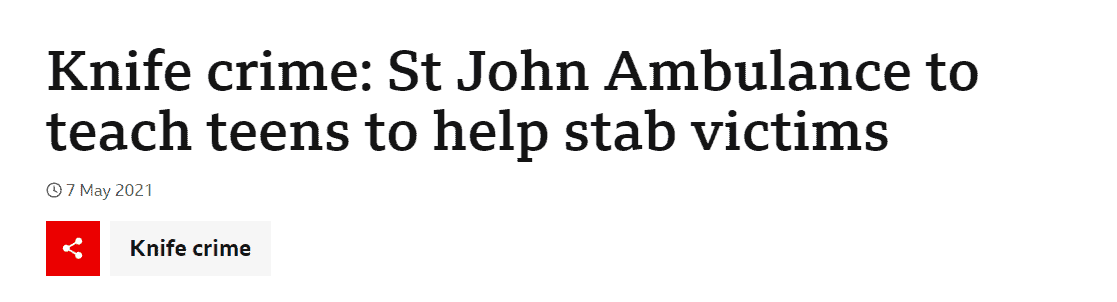
Why is an organization dedicated to medical aid teaching teens how to stab people?
Actual meaning: St John Ambulance, a first aid charity, aims to equip young people with the necessary skills to help victims of stabbings.
9. Lawyers For Mentally Ill Woman Set To Be Executed By U.S. Contract Coronavirus

Those lawyers must have done such a horrible job.
Actual meaning: The lawyers of a woman on death row, who is also mentally ill, have been infected with the Coronavirus.
10. Tesla Model 3 driver again dies in crash with trailer, Autopilot not yet ruled out

Dying sucks, so dying again must suck more.
Actual meaning: A recent accident involving a Tesla has extremely similar circumstances to an earlier accident. Authorities are looking into possible autopilot errors in both cases.
Tips on Avoiding Ambiguity
Headlines (which crash blossoms strictly are) are meant to convey meaning quickly and simply. While ambiguity can lead to hilarious interpretations, it also leads to difficulty in understanding.
Here are a few simple tips to avoid writing crash blossoms
Mind your phrasing
Crash blossoms can occur because some headlines are written to immediately catch a person’s attention. This leads to the use of shock-inducing words and phrases that often introduce ambiguities to the headline. Always double-check for such things.
Consider multiple interpretations
People can interpret a sentence or phrase differently, especially when words with multiple meanings are used. Put yourself in the shoes of your audience. How would they understand your words?
Don’t go overboard
Do too much and your headline becomes an unintelligible mess rather than a compact, understandable sentence. Find the balance between optimizing it for space and conveying meaning.
If you keep finding your headlines too long and need to be trimmed, simplify words, use abbreviations, and lessen your wordplay instead.
Rewrite
If you can’t make a headline work, the better option is to scrap it and start from scratch. It might have a good pun, but if it obscures your meaning, then it’s no good at all. Kill your darlings, as always.
What are your favorite crash blossoms? Share them in the comments below!
If you enjoyed this post, then you might also like:
- The Garden Path Sentence: Getting Rid of Sentence Ambiguity
- How to Improve Your Writing Using the Rule of Three
- Precis Writing: Do’s and Don’ts for Concise Summaries

Cole is a blog writer and aspiring novelist. He has a degree in Communications and is an advocate of media and information literacy and responsible media practices. Aside from his interest in technology, crafts, and food, he’s also your typical science fiction and fantasy junkie, spending most of his free time reading through an ever-growing to-be-read list. It’s either that or procrastinating over actually writing his book. Wish him luck!
