

We may not know for sure whether aliens exist, but that hasn’t stopped plenty of writers from making them the stars of their intergalactic tales. .
If you’re thinking about writing some extraterrestrials into your next story, you might think you can simply write whatever pops into your mind, given that you pretty much have a blank slate to work with.
Well, you’d be both right and wrong. It is easy to imagine things, but it’s hard to think of something truly original, or at least innovative.
These subjects can get complicated fast. Writing about a single imagined creature is easy enough, but a whole imagined world, with all its geography, species, climate, and language? That’s an overwhelming task.
Writing Aliens
Extraterrestrials are some of the most common non-existent (as far as we know) creatures that are featured in stories. With all that we’ve yet to discover about space, it’s easy to see why it’s captured the human imagination.
Naturally, these foreign creatures and far-away galaxies have inspired countless stories. So how do you go about writing things that you haven’t personally encountered? Read on below to find out how to write aliens.
1. Start with what you know and research the rest.
This is solid advice for any writer. It’s impossible to think of something that’s completely outside of humanity’s knowledge; everything we think of has at least some basis in what we know.
Find something you can base your aliens on—not just their appearance, but also their language, culture, technological prowess, and personalities. Just because they don’t exist doesn’t mean you can get away with one-dimensional characters.
Once you’ve found a comfortable base, research how you can further develop your alien world. If your aliens are based on sea creatures, find out how they’ll survive on land, how they’ll speak, how they’ll move—you get the idea.
2. Start with one simple premise.
You have to at least have some sort of idea of what you want. Do you want a humanoid alien? An entire culture and nation? Or just a strange creature on a strange planet?
Even the vaguest idea can jumpstart your process. After all, you’re making something that doesn’t exist. You can do anything you want with it, but make sure whatever you decide fits your story.
General ideas can narrow down your search. It saves you time and effort while keeping the frustrations down.
3. Take your concept in wild directions.
Letting your imagination run wild is sometimes the best thing you can do as a writer. Let logic take a hike for a moment. What’s the wildest thing you can imagine about your alien?
It might be an outlandish idea, but hey, it’s going to be fun! Plus you’re gonna revise the heck out of it anyway, so in the end, it’s gonna at least be a decent idea. Diamonds don’t get pretty until they’re polished, after all.
Some of the weirdest (read: awesome) alien concepts that I know of are:
- In The Companion from Star Trek: The Original Series, a female energy-based creature falls in love with a human. It has a distinct personality, emotions, and a desire for domestic bliss.
- In Solaris from Solaris by Stanislaw Lem, an extraterrestrial takes the form of a massive ocean on another planet.
- In The Weeping Angels from Doctor Who, a race of murdering angel statues feed off your remaining time while teleporting you to the past.
4. Check out what’s around you.
Earth is chockfull of weird and strange things that can defeat your own imagination. It’s smart to use these things as a basis for your idea. Not only do they exist, but thanks to the internet, you’ll be able to research them extensively.
A few of the strangest creatures that exist on earth:
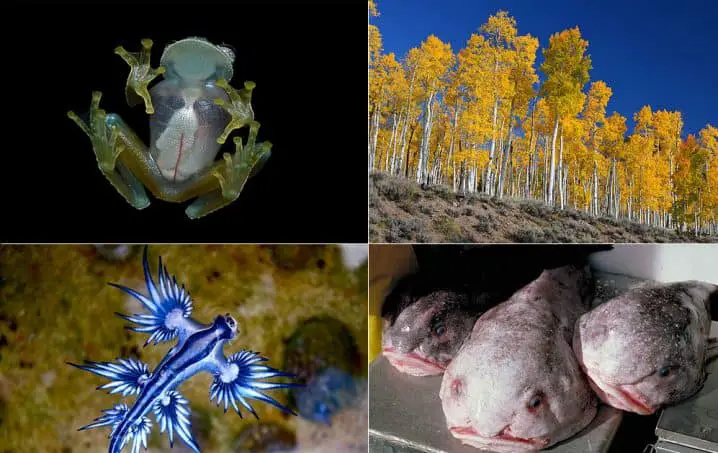
- Glaucus Atlanticus, a small sea slug that looks like a dragon.
- A blobfish, which looks exactly like a blob, just with a face.
- Pando, a massive forest that is actually only one tree.
- Glass Frogs, frogs with translucent skin where you can literally see their insides.
5. Make it realistic.
I know, I know. I just told you to go crazy, and then this? Hear me out.
You’ve conceptualized your alien (or whatever it is you’re conjuring). Now it’s time to make it functional. How does it perform basic biological processes like eating, drinking, speaking, and mating?
Apart from biology, there’s a lot to consider about its physics and sociology, from its culture and society to how its environment directly affects its physiology. They need to make sense as living creatures.
You won’t have fish-looking aliens who live on a desert planet right? Or non-corporeal entities that need to eat with a mouth. Or an entire species who never interact with each other.
But you’re no scientist! How do you do all that? Tons of research. It’s part of being a writer much as the act of writing itself. The more you make your alien feasible, the more it becomes believable.
6. Consult other people.
A writer’s craft can be solitary, but it doesn’t have to be. When you’re writing a book, one of the biggest fears you’ll have is the uncertainty of people liking it.
Flesh out your concept by talking with your mentors, beta readers, or any writing groups you’re part of. Each person has a unique perspective, and that’s a valuable resource in writing.
Don’t worry about someone stealing your idea. Unless they’re brazen, no one’s going to use it exactly as you do.
Why Are a Lot of Aliens Portrayed As Humanlike?
You might have noticed that a lot of aliens from your favorite films or books have plenty of humanlike qualities. It’s about relatability—readers can’t connect with species that are too strange, so popular media did the next best thing: take a human and make it different, but not so much that the original model becomes unrecognizable.
It’s one of the limitations of the human mind. How can a reader relate to an alien if they can’t understand its motivations and thoughts? Aliens as thinly-veiled humans, both in appearance and behavior, are much more easy to understand and relate to.
That hasn’t stopped writers from challenging the human mind though. You’ll regularly read about concepts that are so out there you’ll wonder how the writer came to formulate them.
Be Careful With Your Aliens
There’s a balance you’ll need to strike when creating your non-existent creature. Take it too far and it will either sound ridiculous or confusing. Play it too safe and it’ll end up bland and generic.
Remember, you’re not just creating a creature—you’re also writing a story. The point is to create something that gets your idea across to the readers. Fail at making an effective life form and your story won’t be as good.
What’s the weirdest alien concept you’ve read about? Share it in the comments below!
If you enjoyed this post, then you might also like:
- The Best Science Fiction Books: Our Editor’s Top Picks
- Exploring Speculative Fiction: Your Guide to this Super-Genre
- 25 Mythical Creatures and Where to Find Them in Literature

Cole is a blog writer and aspiring novelist. He has a degree in Communications and is an advocate of media and information literacy and responsible media practices. Aside from his interest in technology, crafts, and food, he’s also your typical science fiction and fantasy junkie, spending most of his free time reading through an ever-growing to-be-read list. It’s either that or procrastinating over actually writing his book. Wish him luck!

_cropped.jpg)


.jpg)