

Have you ever wished you could visit the places from your favorite novels, or walk in the footsteps of your literary heroes?
You’re definitely not alone. If you’re anything like me, you’ve probably paused your reading session long enough to do a quick Google search and find out whether or not the town, park, or bar the characters are frequenting actually exists.
In many cases, you may have come across links advertising tours related to that book or the book’s author. Fortunately for us bookworms, literary tourism exists to place us right in the settings of our favorite novels and the old haunts of admired authors.
Literary Travel and Tourism
Literary travel, or literary tourism, refers to a type of tourism with a focus on literature. Travelers visit places that inspired locations in literary works, or places that were frequented by authors.
For example, Shakespeare fans might visit the Bard’s home in Stratford-upon-Avon, or Stephen King fans might seek out locations that appeared in or inspired his novels. Other literary travelers might opt to visit literary “hubs,” cities with vibrant communities of writers and literary scenes, or famous bookstores.
The travel industry has capitalized on the trend of literary tourism by offering various guided tours and itineraries with literature-related themes.
10 Must-Visit Literary Destinations
Below are 10 must-visit literary travel destinations where book lovers can find adventure and walk in the footsteps of some of their favorite authors and characters.
1. Enjoy a “room with a view” in Florence.
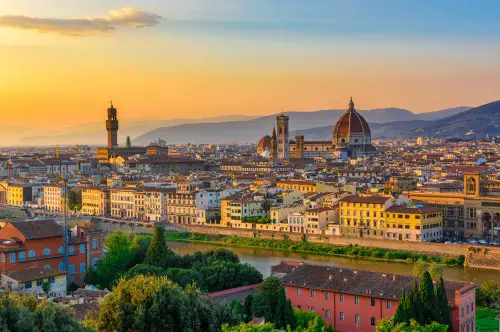
Florence, and Italy more generally, have provided the background for more than a few literary works. Perhaps you were seduced by the idea of buying a quaint fixer-upper in the hills of Tuscany surrounding Florence after reading Frances Mayes’s Under the Tuscan Sun.
Or, perhaps you fell in love with the dreamy city thanks to E.M. Forster’s A Room with a View, which describes a glorious morning in the heart of this Renaissance town:
“It was pleasant to wake up in Florence, to open the eyes upon a bright bare room, with a floor of red tiles which look clean though they are not; with a painted ceiling whereon pink griffins and blue amorini sport in a forest of yellow violins and bassoons. It was pleasant, too, to fling wide the windows, pinching the fingers in unfamiliar fastenings, to lean out into sunshine with beautiful hills and trees and marble churches opposite, and, close below, Arno, gurgling against the embankment of the road.”
Go there: The Pensione Bertolini, where Lucy and Charlotte stay in A Room with a View, was reimagined as Villa Maiano for the film adaptation. Significant portions of the book and film also take place at Piazza della Signoria. For your own room (and gorgeous rooftop) with a view of the iconic Duomo, book a stay at the Hotel Cardinal.
2. Explore Steinbeck’s Monterey an Salinas, California.
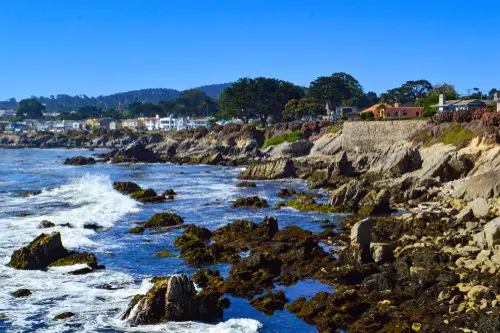
John Steinbeck was known for his portrayals his native California beautifully but honestly, exploring social justice issues (particularly those related to agriculture and labor) against idyllic, natural backdrops.
Born in Salinas, a vibrant agricultural hub in Central California, Steinbeck used his hometown and nearby Monterey as the setting of his novels East of Eden, Cannery Row, Tortilla Flat, and others.
“Cannery Row in Monterey in California is a poem, a stink, a grating noise, a quality of light, a tone, a habit, a nostalgia, a dream.”
Opening line of Cannery Row
Go there: Visit the National Steinbeck Center, which hosts tours, exhibitions, and other special events that celebrate the author, his works, and the causes he championed. You can also visit the actual Cannery Row, the waterfront street bordering Pacific Grove and Monterey.
3. Follow Hemingway through Cuba.
Cuba is another gorgeous but complicated country that has generously lent itself to many novels and short stories, including many by Ernest Hemingway, such as The Old Man and the Sea and To Have and Have Not.
The author also lived there for nearly 30 years, and it’s also where he wrote two For Whom the Bell Tolls and A Moveable Feast.
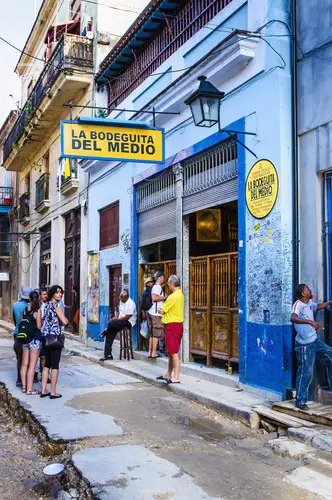
Go there: Hemingway aficionados will want to visit the author’s home, Finca Vigía, which is now a museum. Or, take a trip to La Bodeguita del Medio in Old Havana (pictured above), where you can sign you name on the wall next to Hemingway’s own signature (if you can find space!). The bar claims to be the birthplace of the mojito and was one of Hemingway’s favorite spots in the capital city.
4. Experience magical realism in Cartagena, Colombia.
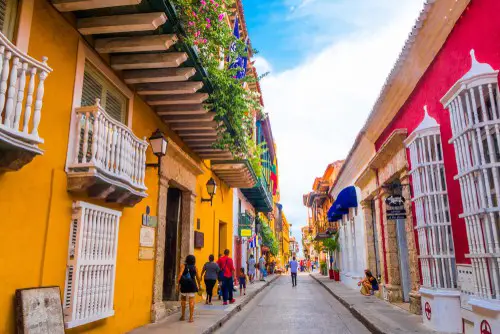
Gabriel García Márquez is famous for using his magical realism to bring his home country of Colombia to life on the page.
Literary critic Robert Sims has noted, “No one can deny that García Márquez has helped rejuvenate, reformulate, and recontextualize literature and criticism in Colombia and the rest of Latin America.”
“From the sky they could see, just as God saw them, the ruins of the very old and heroic city of Cartagena de Indias, the most beautiful in the world.”
Love in the Time of Cholera
In 1982, Márquez received the Nobel Prize in literature, making him the first Colombian and fourth Latin American to receive the award in that category.
Go there: Book the Gabriel García Márquez Literature Tour in Cartagena. This guided walking tour will take you to hard-to-find places believed to inspire the fictional locales from Márquez’s books.
5. Get close to literary greatness in Massachusetts.
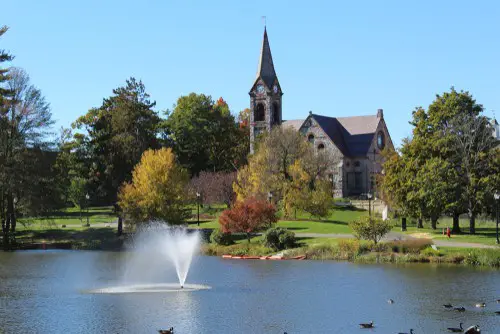
There must be something in the water in Massachusetts, because the areas of Amherst, Concord, and Lenox boast a rich literary history, and were home to some of American Lit’s most prominent names.
Emily Dickinson, for one, had two properties in Amherst, set on three acres of natural beauty that inspired much of her work. She also attended nearby Amherst Academy, whereas Robert Frost taught at Amherst College.
In Concord, Ralph Waldo Emerson hung his hat, as did Louisa May Alcott, who wrote Little Women (and also set the story) in the town.
In Lenox, you can visit Pulitzer Prize–winner Edith Wharton’s home, and enjoy an afternoon at The Bookstore and its charming on-site wine bar, aptly named “Get Lit.”
Go there: Book tickets for the Emily Dickinson Museum, which is set in the poet’s former home, then visit the Emerson house for a guided tour. End the day by nursing a glass of wine and a great book The Bookstore.
6. Spend the night at the hotel that inspired The Shining.
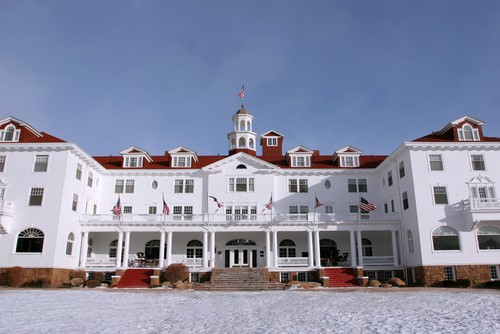
If you’re a Stephen King fan (and feeling rather brave), book a stay at the hotel that inspired Stephen King him to write The Shining.
King fans know The Stanley Hotel, located in Estes Park, Colorado, as “The Overlook.” Located approximately five miles from the Rocky Mountain National Park, the hotel opened in 1909. Much like the book’s plot, King checked into room 217 for a stay of one night with his wife just as all other guests were checking out, as the hotel prepared to shut down for its winter season.
The autor roamed the deserted halls before heading downstairs for a drink at the hotel bar, where he were served by a bartender named Grady. Earlier in the evening, he and his wife ate dinner in the dining room, where all other tables had the chairs stacked on top, and orchestral music echoed down the halls.
King says that by the next morning, he had the bones for The Shining firmly set in his mind, having been inspired by the hotel’s remote location, grand size, and eerie desolation.
Here’s one passage that introduces the fictional Overlook:
“Any big hotels have got scandals,” he said. “Just like every big hotel has got a ghost. Why? Hell, people come and go. Sometimes one of em will pop off in his room, heart attack or stroke or something like that. Hotels are superstitious places. No thirteenth floor or room thirteen, no mirrors on the back of the door you come in through, stuff like that. […]”
Go there: Book your stay at The Stanley Hotel in Estes Park, Colorado. Be sure to ask for room 217 (where King stayed), which the hotel itself lists as one of their rooms with “high paranormal activity,” along with rooms 401, 407, and 428.
7. Visit Iowa City, an official “City of Literature.”
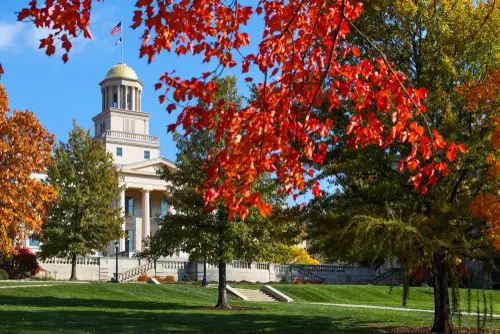
Iowa City, Iowa, is a UNESCO City of Literature (and until 2017, was the only U.S. city to be recognized as such).
The University of Iowa is considered one of the best colleges for creative writers, as its Iowa Writers’ Workshop has produced 17 Pulitzer Prize winners and six poets laureate.
Book lovers can check out the Iowa City Literary Walk, which pays tribute to 49 writers who have ties to Iowa, and features bronze panels of quotes from writers like Flannery O’Connor, Robert Lowell, and Raymond Carver.
Go there: Plan to visit in June so you can enjoy the Iowa Summer Writing Festival’s “The Eleventh Hour” lecture series, which is free and open to the public every weekday, beginning on June 8th.
8. Celebrate Haikus and Murakami in Tokyo.

Fans of poetry, Japanese literature, and beloved writers like Haruki Murakami will not want to miss Tokyo’s literary delights.
The famous Haiku poet Basho lived in Tokyo’s Koto ward during the Edo period, and it’s here that he wrote some of his most iconic poems.
The Basho Memorial Hall features exhibits on Basho and other Haiku poets, and the adjacent Basho-An Historic View Garden allows you to read the poet’s stone-inscribed poems while enjoying views of the Sumida River.
Most of Haruki Murakami’s novels are set in modern-day Japan, with many in Tokyo. Fans of Murakami, one of Japan’s most successful contemporary writers, can find many real-life locations from his books on their own literary adventure in the capital city.
Go there: Visit The Basho Memorial Hall, then take a Murakami tour using the guides from The Murakami Pilgrimage to visit the Shinjuku from After Dark, or the mysterious stairwell before the Ikejiri exit of the Tokyo metro where it all begins and ends in 1Q84.
9. Plan your own odyssey in Greece.
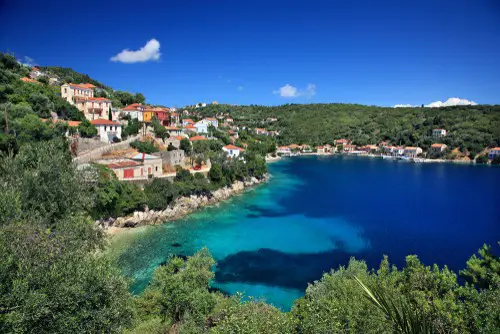
In 2018, Athens was named a UNESCO World Book Capital, but there are many things for book lovers to see and do outside the nation’s capital city.
Plan a holiday on the island of Ithaki, where Homer’s Odyssey concludes, and where Penelope patiently waited for her husband’s return.
Or, visit the setting of one of the first novels, Daphnis and Chloe by Longus, by spending the day on Lesvos. The third-largest Greek island, Lesvos is mostly untouched by mass tourism, so you can enjoy genuine experiences, traditional food, and uncrowded beaches.
Go there: Turn your entire vacation into a literary event by taking this Greek Odyssey Tour across Greece and Turkey, where you can walk (or sail) in Odysseus’s footsteps through Mykonos, Rhodes, Athens, Kusadasi, and Istanbul.
10. Honor Middle Eastern literature in Cairo.
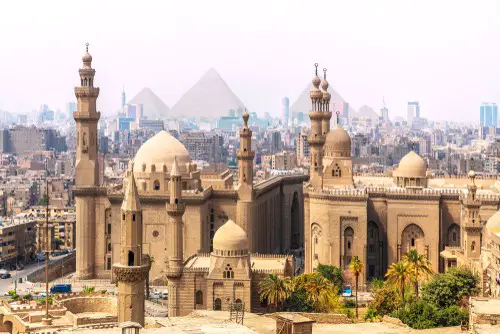
Cairo is home to one of the largest annual book fairs in the Midde East, and full of literary gems that book lovers will treasure.
Visit beloved independent bookstores like Kotob Khan in Maadi or Balsam Bookshop (for kids) in Mohandiseen.
Take a literary tour inspired by the works of Nobel Prize for Literature winner, Naguib Mahfouz, or stop by Café Riche, which was once a hangout for many artists and writers.
Go there: Plan your trip around late January and early February to enjoy Cairo’s annual international book fair, which is followed by the Cairo LitFest. Ahmed Seddik also offers a walking tour of the “Cairo of Naguib Mahfouz.”
Read It Then See It
While there are many books filled with fictional places that we can’t visit, it’s good to know that there’s an entire travel niche dedicated to helping readers find the real ones.
So for your next vacation, why not try to hit up some of these literary hot spots so you can really dive into the story?
Are there any literary destinations you’d like to visit? Tell us about them in the comments below!
If you enjoyed this post, then you might also like:
- 10 Famous Bookstores Around the World
- 12 Best Travel Books to Inspire Your Next Adventure
- 10 Best Books Based on True Stories
- Food from Fiction: Recipes Inspired by Your Favorite Books

As a blog writer for TCK Publishing, Kaelyn loves crafting fun and helpful content for writers, readers, and creative minds alike. She has a degree in International Affairs with a minor in Italian Studies, but her true passion has always been writing. Working remotely allows her to do even more of the things she loves, like traveling, cooking, and spending time with her family.
