

Whether you prefer literary or mass market fiction, chances are that most fiction books you have lying around the house can be classified as novels.
You may wonder why that’s worth noting, since novels seem like a pretty commonplace thing: people read them at the beach, on the train, or even listen to them during their morning commute.
But novels weren’t always the standard format for enjoying fiction. Back before there was the printing press, it was extremely costly and time-consuming to produce books.
Most people only owned one book—usually the Bible—and there was a good chance they couldn’t even read it.
Then there are the stories themselves that we might take for granted. Most stories that were popular before the 1700s hardly resembled the modern novels we know today, with a dynamic protagonist who sets off on a quest and faces a number of challenges along the way.
To get a better understanding of how much fiction has evolved over the centuries, let’s take a look at the history of the novel and how the world of books has evolved.
The History of the Novel
The following is a brief history of the novel, starting from Classical Greece all the way to contemporary times.
Greece
The earliest Western novels include classical Greek and Latin prose narratives written from the 1st century BC to the 2nd century AD. Chariton’s Callirhoe is often cited as the oldest surviving Western novel.
Other examples of early novels from this time include Petronius’ Satyricon, Lucian’s True Story, Apuleius’ The Golden Ass, and the anonymous Aesop Romance and Alexander Romance.
While there are no clear distinctions in genre between these early examples, they each represent extended narrative fiction in prose. This format was later adapted in Byzantine novels of the 12th century, like Hysimine and Hysimines by Eustathios Makrembolites.
Japan
In 1021, noblewoman and lady-in-waiting Murasaki Shikibu completed The Tale of Genji. The original manuscript was created on several sheets of paper pasted together and folded alternately in one direction, then the other.
The work recounts the life of Hikaru Genji, the son of a Japanese emperor who demotes his son to commoner status. It also focuses on Genji’s romantic life and portrays the customs of Japanese aristocratic society at the time.
The Song and Ming Dynasties
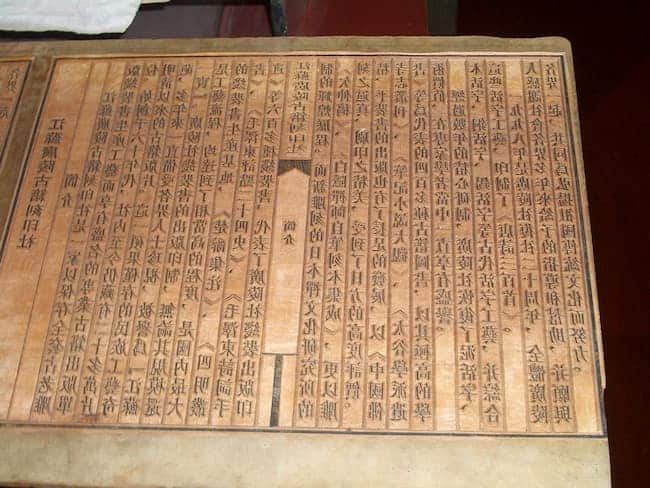
Under China’s Song Dynasty (960–1279), there was rapid urbanization and the spread of printed books. By the Ming Dynasty (1368–1644), many stories which were traditionally told orally were being turned into fiction novels.
Although China was already printing books for centuries, it wasn’t until 1439 that Europe saw revolutionary developments in printing with Johannes Gutenberg’s printing press.
The Medieval Period and the Novella
In the early 13th century, there was a shift from verse to prose (the form we consider standard for both fiction and nonfiction writing today, without metrical structure).
Here’s an example of what prose looks like:

And an example of verse:

Prose was attractive to writers because not only did it give them more freedom, but it allowed them to mix popular stories (traditionally told in verse) with histories (traditionally written in prose). Prose was also easier to translate.
Around the High Medieval period, chivalric romance gained popularity in Europe. These adventures often told of a heroic knight who embarked on a quest and pursued courtly love. One famous example is Le Morte d’Arthur by Sir Thomas Malory, published in 1485.
This is where we start to see the emergence of basic plot structure presented as prose. Still, these weren’t quite novels, but novellas—usually fairy tales, jokes, and humorous tales longer than short stories, but shorter than what we consider a novel today.
The Renaissance and the Printing Press in Europe
By the 16th and 17th centuries, the advent of the printing press had created a new market for relatively cheap entertainment and information.
This led to the spread of chapbooks, or small booklets folded into 8, 12, 16, or 24 pages. These booklets reached their peak during the 17th and 18th centuries, when folk tales, children’s stories, nursery rhymes, poems, almanacs, and even political and religious texts were printed as chapbooks.
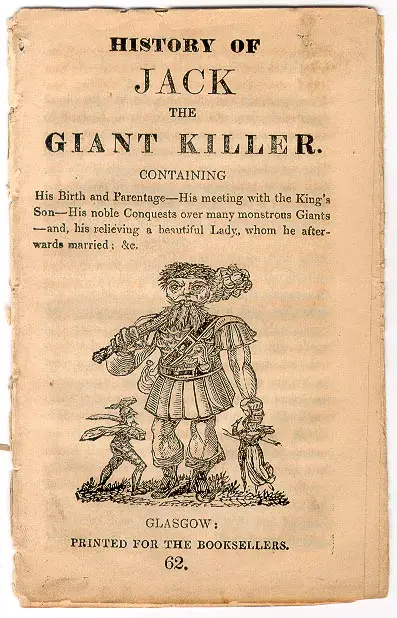
These cheap printed booklets reached thousands of urban citizens and country merchants who visited the cities as traders.
The Rise of the Modern Novel
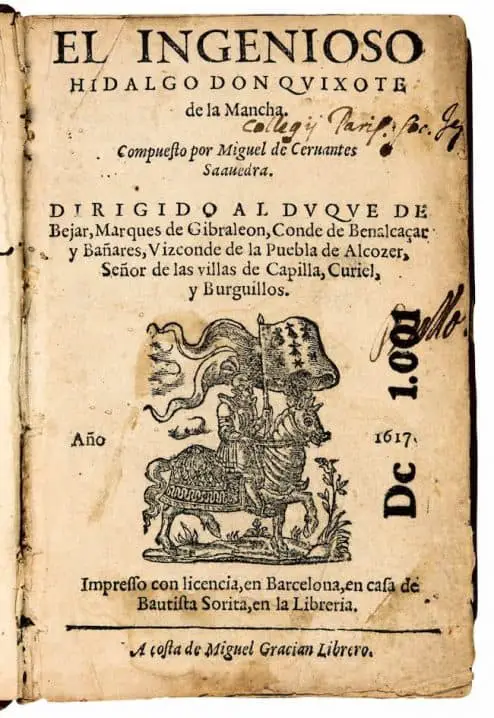
The rise of the modern novel arguably began with Miguel de Cervantes’ Don Quixote, the first part of which was published in 1605, and later his Novelas Exemplares, published in 1613.
Don Quixote is considered a prototype of the modern novel because it shared many goals with today’s novels. The book includes both social commentary and literary criticism, going beyond mere entertainment or the reiteration of popular ideas and history.
It also includes a dynamic array of characters with different beliefs and perspectives, unlike the romances that until then typically focused on a relatively static (and always noble) main character who embarked on a journey, in a story whose main goal was to reinforce contemporary ideals (like chivalry).
Literary critics of the time recognized the benefits of the novel, including its brevity (in contrast to epic poetry), fresh and plain style, and a focus on modern life, with heroes who weren’t necessarily good or bad.
While Daniel Defoe’s Robinson Crusoe of 1719 is cited by some critics as the first modern English novel, others argue that his characters were not fully developed enough, and too closely resembled the old romantic heroes. Instead, credit is often given to Samuel Richardson’s epistolary novel Pamela, published in 1741.
By the late 18th century, novels were increasingly accepted as true “literature”—that is, on par with the classics—especially when critics realized that many novels could be interpreted theologically.
Evolving Trends
Also at the end of the 18th century, romance experienced a revival, but not all critics were happy with how gothic fiction portrayed its version of romance.
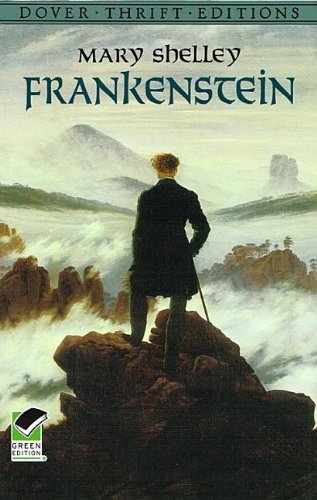
This “new” fiction used underlying themes of sexuality, desire, anxiety, and the grotesque, which, although initially controversial, explored human motives on a much deeper level than its predecessors. Mary Shelley’s Frankenstein and Edgar Allen Poe’s Tales of the Grotesque and Arabesque are two examples of this.
Romanticism was just one of the first monumental periods in literature after the rise of the modern novel. It reigned well into the mid-19th century before giving way to Transcendentalism, which would then inspire another movement, and so on.
By this point, the form of the novel was well established, but the types of stories and their themes continued to evolve.
New genres of fiction were also born, including science fiction, thrillers, and other mass market genres we recognize today. In fact, the origins of modern genre theory are often linked back to the Romantic era.
Read more about the relationships between Western literary movements and how each left a mark on literature, leading us to the current period.
The Book-worthy History of Novels
When we look at the history of the novel, we can see how so many other historical developments were needed to bring us where we are now.
From the printing press to trailblazing authors who toyed with new narrative formats, the history of books is full of exciting changes that led to the evolution of the modern novel.
Did you find this post helpful? Let us know in the comments below!
If you enjoyed this post, then you might also like:
- A Brief History of Books: From Ancient Scrolls to Digital Publishing
- Western Literary Movements: A Brief History of 9 Essential Periods
- 6 Ways the Printing Press Changed the World
- Book Burning: A Brief History of Bibliocide

As a blog writer for TCK Publishing, Kaelyn loves crafting fun and helpful content for writers, readers, and creative minds alike. She has a degree in International Affairs with a minor in Italian Studies, but her true passion has always been writing. Working remotely allows her to do even more of the things she loves, like traveling, cooking, and spending time with her family.


