
Tropes are recurring elements in a literary work that are used to enrich a story. Though tropes have gained negative reputations as overused devices bordering on clichés, they are still useful tools for creating a story.
It’s inevitable for certain ideas to be recycled and reused. After all, pretty much every idea is inspired on at least some level by one that came before it. Tropes became tropes because they simply work, withstanding time and changing reader perspectives.
Common Fantasy Tropes
The fantasy genre alone has thousands of longstanding tropes we can explore. Let’s take a look at some of the most common tropes being used until today.
1. The Chosen One
The fate of the world depends on a single person, who alone is capable of solving the story’s main conflict. They fail, and the world fails with them.
Chosen Ones normally have something special going on in their lives. They could be subject to a prophecy, or maybe they hold a certain special ability. Often times, they’re plucked from obscurity, being orphans, royal bastards, or born to simple folk before being catapulted to the spotlight for whatever reason.
In The Wheel of Time, Rand Al’Thor’s life changes when he learns that he is the Dragon Reborn, the literal champion of Light.
2. The Dark Lord
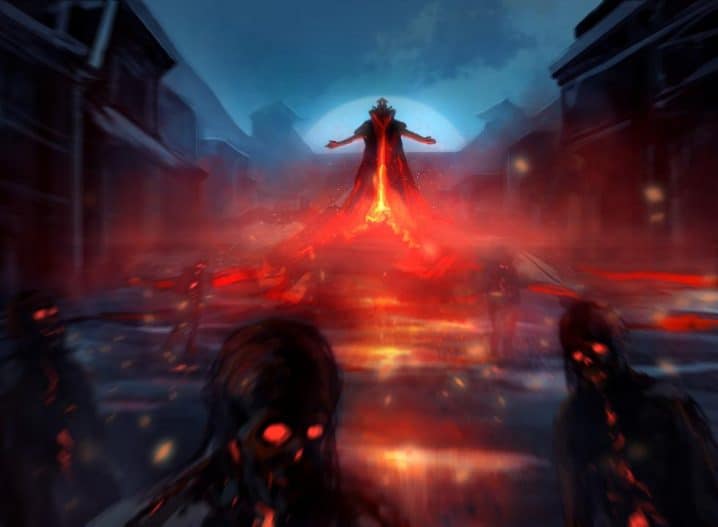
Dark Lords are often bent on world domination and general mayhem. They’re the personification of evil, being morally bankrupt and all too comfortable with going too far.
They’re the exact opposite of the protagonists. They act as foils that highlight the protagonist’s better qualities. They’re the main reason for a story’s conflict, and give readers someone to focus their hatred on. Conflicts are resolved once the Dark Lord is dead, and peace can finally reign on the story’s setting.
In The Sword of Truth series, Darken Rahl acts as the archetypal evil overlord, power-hungry, vicious, and willing to do anything for world domination.
3. Good vs. Evil
Most fantasy stories have a clear line between good and evil, with each side having certain characteristics that separate them from the other. Good guys are purely good, and bad guys are purely evil, with no grey area in between.
Conflict is often about one side defeating the other, with Good defeating Evil without widespread damage and loss of life while maintaining a pure conscience and morality.
In The Inheritance Cycle, The Varden and Elves are presented as righteous and noble, while the Empire is depicted as evil.
4. Magic

Magic is the element that defies explanation, and when it comes to fantasy literature, it’s often portrayed as the embodiment of power in a fantasy world. It’s a special ability exclusive to only a few people, and this is what sets them apart from normal folk.
With magic, characters achieve impossible feats that defy normal explanation. Elements of a story can be explained away as the results of magic, rather than mundane reasons.
In the Book of Swords, magic is a side effect from The Change, a physical restructuring of the world to prevent a global apocalypse, rendering most of technology unusable. Here, magic requires a lifetime of dedication and is mostly used to influence others due to being weak against iron and steel.
5. Damsels in Distress and Femme Fatales
These are basically two tropes about women that fall at different ends of the spectrum.
The damsel in distress portrays a weak and helpless female that basically can’t function by herself without the assistance of a stronger protagonist, while Femme Fatales are women who are feminine yet dangerous, and can cause distress to a man.
Both can be utilized to inject romance into the story, often as the protagonist’s love interest. In Peter Pan, Wendy is kidnapped by Captain Hook, only to be rescued by Peter. The Dresden Files‘ Lara Raith is a walking succubus/vampire who constantly kicks ass in heels.
6. The Mentor
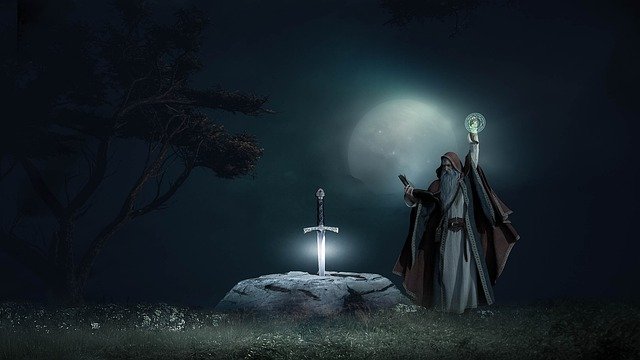
Early on in the story, protagonists are often found by a wise and powerful mentor figure who helps them develop their abilities.
Most often, they’re renowned magicians and warriors, or recluses with hidden talents. King Arthur has Merlin, Harry Potter has Albus Dumbledore, and Percy Jackson has Charon.
These mentors stay on as the protagonist’s right-hand man, offering advice and arcane/martial support. In the Chronicles of Narnia, Aslan acts as the archetypal mentor, often giving the Pevensies advice that turns their situations around.
7. Racial Homogenization
Different races are separated by clearly defined characteristics that apply to their races as a whole. Every elf is tall, fair, and a master of magic, while every dwarf is short, brash, and a master craftsman. In the Stormlight Archive, Thaylens are all traders and merchants with long eyebrows, the Alethi are militaristic and possess tan skin and dark hair, and the Azish are scholars with dark skin and hair.
On a wider note, races that are evil-aligned appear to be monstrous with a less advanced culture, while good-aligned races are portrayed as beautiful and enjoy the benefits of an advanced society. Humans, elves, and dwarves are good, while orcs, trolls, and kobolds are automatically evil.
8. Ancient Settings
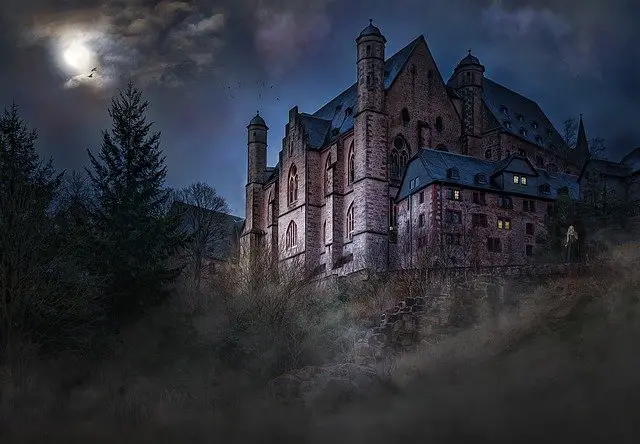
Many fantasy writers draw inspiration from medieval Europe or classical times in their worldbuilding, choosing to mimic the society of those times and populating their world with the relevant folklore.
The setting doesn’t actually take place in our world, but rather in a world that closely resembles our reality during those times. In some cases, the story sets out in more modern settings but includes important ancient settings (i.e. lost continent, undiscovered temples, and long-established buildings).
The Riftwar Saga deals with two different worlds: Midkemia resembles medieval Europe in both technology and society while Kelewan is dominated by a largely ancient Asian setting.
9. All-Powerful Artifacts
Conflict in fantasy can often revolve around a single item that holds tremendous power. Most often, the protagonist and antagonist race against each other in claiming this item. Depending on its use, it can either save the world or destroy it.
In Lord of the Rings, the Fellowship attempt to bring back the One Ring to Mount Doom in order to destroy it, while Sauron sends out his minions to recover it. The Deathly Hallows are highly coveted items in Harry Potter, with the Elder Wand becoming an obsession for Voldemort.
10. Taverns
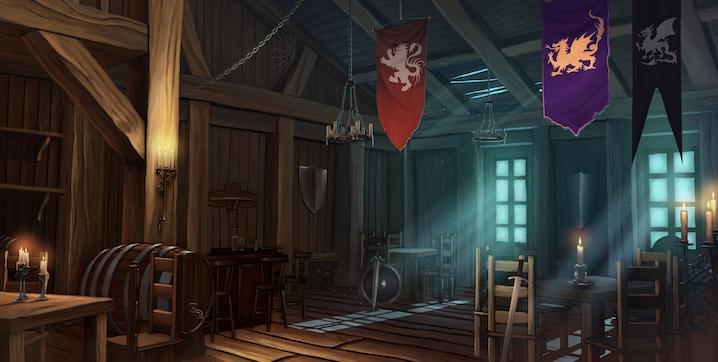
Taverns function as rest stops and information centers in fantasy worlds. These are places where things happen. All sorts of people meet, plots can progress, and characters can rest and burst into song.
Opportunities for camaraderie and fights naturally happen in here. In some cases, taverns become the main setting for a story, as seen in the Kingkiller Chronicles, where the protagonist Kvothe poses as a tavern keep.
11. Overqualified Party
Heroes require companions in their journey. As heroes are generally awesome, it follows that their companions need to be awesome too. More often than not, a hero’s companions possess extraordinary talents and abilities or are born into royalty and powerful families.
In The Wheel of Time, Rand, Mat, and Perrin start off as ordinary friends. As the series progress and Rand continuously advances as the Dragon Reborn, so do his friends. Perrin develops wolflike abilities and Mat becomes the general of a legendary army. Both later go on to marry powerful figures themselves.
12. Dragons
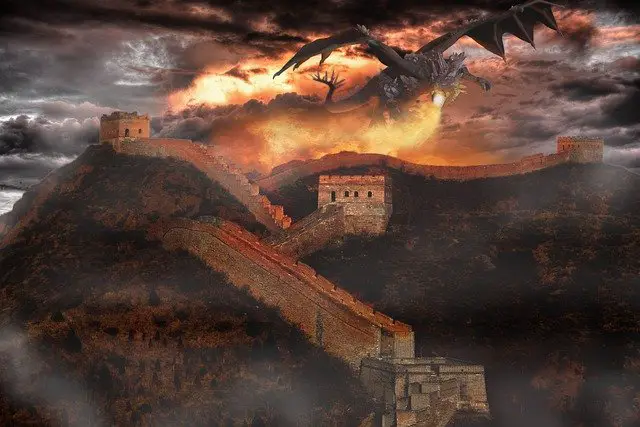
Dragons are some of the most powerful creatures in human mythology. In fantasy settings, they’re often portrayed as legendary creatures of absolute power. They’re either portrayed as friendly mentor types, or greedy antagonists.
The Inheritance Cycle revolves around dragon riders, a powerful group of people and dragons that keep the peace of the land. In a more modern fashion, Temeraire inserts dragons as an air force during the Napoleonic wars.
13. The Quest
The quest is what kickstarts the hero’s journey. It’s the ultimate goal that encompasses the entire story, from either finding an artifact to defeating the villain. Quests are usually undertaken due to a prophecy, and can function as a right of passage for the hero.
Greek mythology is chockful of quests, one of the most famous being Jason and the Argonaut’s journey to recovering the Golden Fleece.
14. An Inheritance/ Hidden Truth
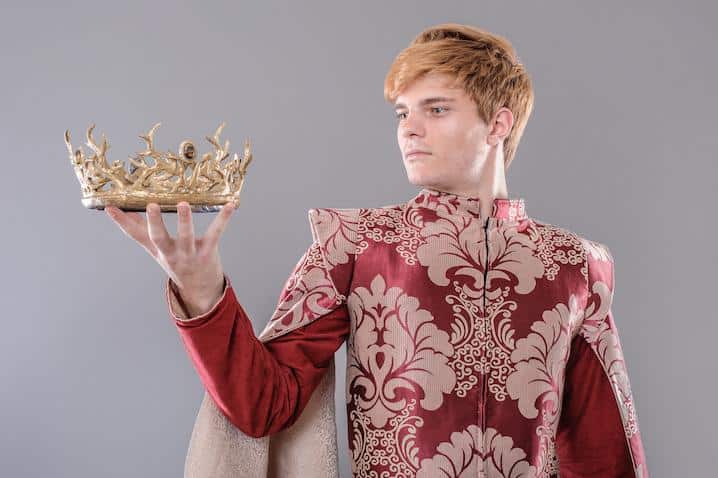
It turns out, the ordinary hero is not so ordinary. For whatever reason, the truth is revealed and the hero finally learns about their origins. Whether due to an heirloom, being told on their foster parent’s deathbed, or accidental discovery, this truth acts as a catalyst to the hero’s growth.
In the Codex Alera series, Tavi is raised as a normal teenager. Later on in the series, he is revealed to be related by blood to the First Lord and later on takes up the mantle of First Lord.
15. Training Sequences or Magic Schools
Heroes advance quickly but not overnight. Training sequences and magic school settings allow writers to flesh out a character’s growth. They lay a solid foundation on how a character achieves their skills and experience.
In one episode of Avatar: The Last Airbender, Sokka learns swordsmanship from a Fire Nation instructor and forges his own sword. From then on, his primary method of combat is the sword rather than a boomerang.
Repurposing the Old
Much like repeated consumption of a particular food makes it lose its flavor, overusing a trope can create a bland and predictable story. Though these tropes survived the test of time because they were effective story writing tools, there always comes a time when readers look for something new.
Here are a few tips for making these tropes your own and keeping your readers on their toes.
1. Use readers’ expectations against them.
As a consequence of overuse, tropes are predictable. Readers can already tell how a trope will fit into your story. You can use these expectations against them by going in the opposite direction of what they assume.
Imagine the classical hero, noble and good. Readers assume that the hero stays that way and proves that at the end that evil never triumphs. But starting your hero as virtuous and slowly turning them to an anti-hero makes a less boring story, right?
This is how Geralt of Rivia from The Witcher developed. He starts off as a good guy who does what’s right, but grows disillusioned as he gains experience as a witcher.
2. Deconstruct.
In deconstructing a trope, its flaws are examined in detail to show what real-world consequences can arise. The fate of the world will never be entrusted to a farm boy with little education and skill, and leadership will never be based on a person pulling out a sword from stone.
In Percy Jackson and the Olympians, rather than focusing on the glory of being a demigod, Riordan takes a harsh look at how teenage half-bloods live a miserable life, being seen as problematic kids and always in danger from monster attacks.
Examining a trope and playing it according to reality opens up different avenues to writing a story that’s thrilling and original. Elements of the trope will still be there but stripped away to their core meaning.
3. Defy the norm.
Characters that are fair-looking are assumed to be good, while those with ugly, dark appearances are evil. Flipping these kinds of norms can create interesting situations and deeper characters.
In the First Law Trilogy, Bayaz appears to be the typical mentor archetype: he’s wise, kind, and powerful. As the novel progresses, we uncover the darker side of his personality, as he’s willing to sacrifice and use others to accomplish his goals. In the end, he turns out to be no better than those he labeled evil.
Blurring the lines by going against established fantasy norms creates fresh experiences for readers, and a way for your story to stand out.
Turning Tropes on Their Heads
Writing fantasy can be a tedious process. Creating a world that still closely resembles ours, while inserting fantasy elements is no easy feat. Though different, it still has to adhere to reality in order for readers to understand and make a connection.
Tropes help in the way that they’re always familiar territory. Readers know how they operate, which gives them room to settle into your novel. They’re definitely useful tools in fleshing out your story.
The danger comes when tropes are overused and things become too familiar. You risk your story becoming generic. It’s helpful to read up and consider which tropes would work best with your ideas. Having fun with a trope and giving it your personal stamp also helps maintain your originality.
You shouldn’t fear using tropes, but rather think critically about how they can best be used to enrich your story and entertain your readers.
Do you have a favorite (or least favorite) fantasy trope? Share your thoughts in the comments below!
If you enjoyed this post, then you might also like:
- In Defense of the Manic Pixie Dream Girl: Subversions and Deconstructions of a Disowned Trope
- The Unreliable Narrator: Definition, Examples, and How to Spot One
- How to Write a Romance Novel: 11 Tips for a Passionate Bestseller
- The Great HEA Debate: Can Romance Be Romance Without a Happily Ever After?

As a blog writer for TCK Publishing, Kaelyn loves crafting fun and helpful content for writers, readers, and creative minds alike. She has a degree in International Affairs with a minor in Italian Studies, but her true passion has always been writing. Working remotely allows her to do even more of the things she loves, like traveling, cooking, and spending time with her family.

bög